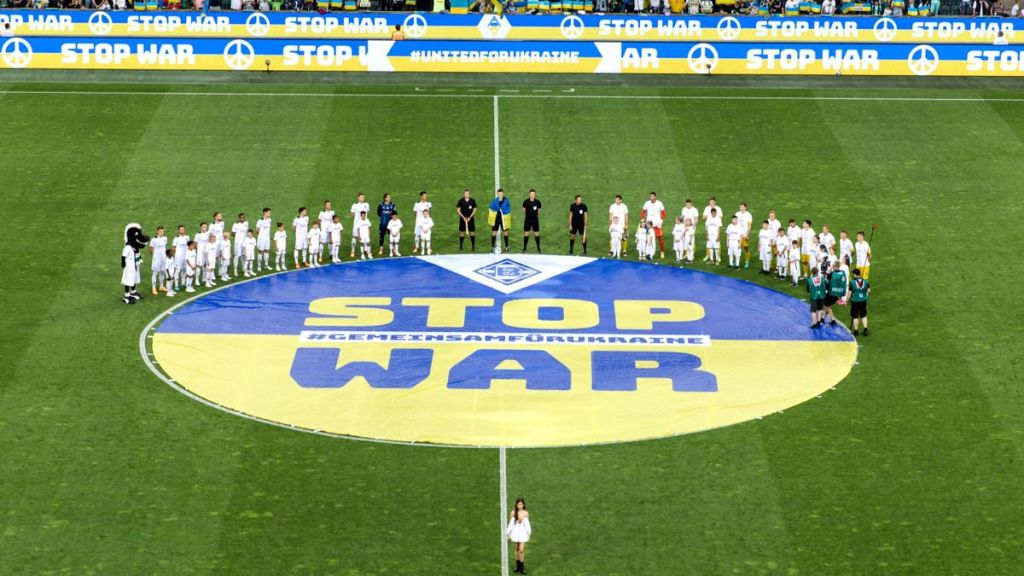
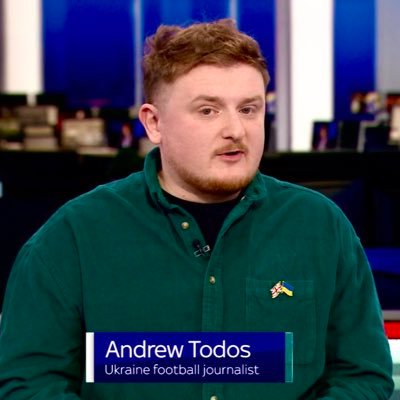
It’s been 505 days since Vladimir Putin ordered a full-scale invasion of Ukraine. Since then, there have been tens of thousands of deaths, including civilians – as well as an unimaginable amount of infrastructural damage. The everyday lives of every Ukrainian has been severely impacted – everything from school, work and their social lives, including sports, have been uprooted. I wanted to shed light on the current situation facing football in Ukraine, which is why I spoke to Andrew Todos, a British-Ukrainian sports journalist – who provided some incredibly valuable insight on what is a very difficult and complex topic.
An Interview With Andrew Todos
How significantly has Russia’s invasion of Ukraine impacted football in Ukraine (at national and club level)?
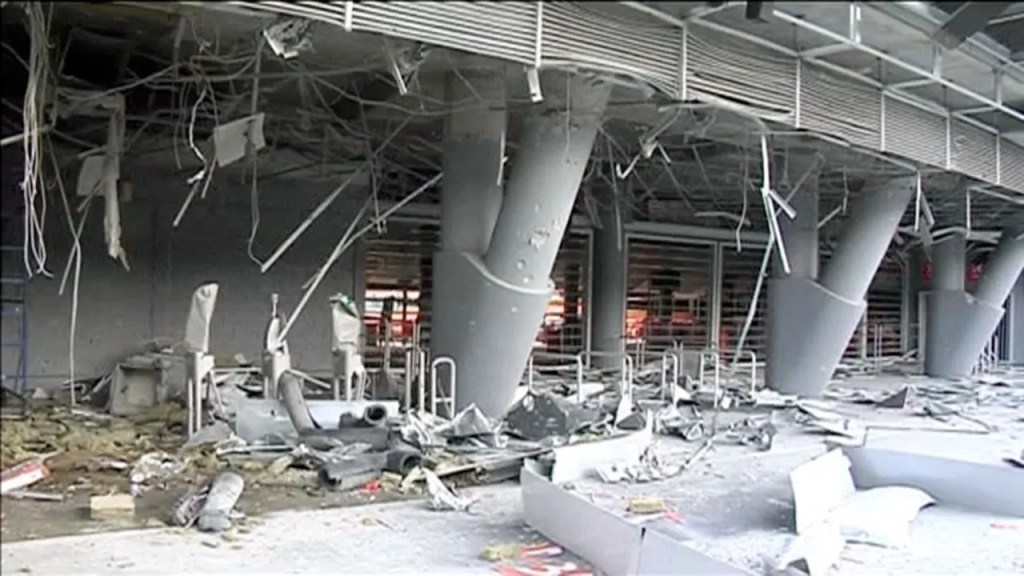
“It’s been rather dramatic for both levels. Domestically stadiums and football infrastructure has been destroyed across the country. This has even led to certain professional clubs like Mariupol & Desna to fold. On top of this, most foreign players left when the full scale invasion first began. There has been a slow influx of foreign players since the 22/23 season started however the quality of these players is considerably lower than that of what clubs could attract prior to 24/2 (E.g. David Neres joined Shakhtar in Jan 2022 – then left for Benfica having played 0 games due to the war). Professional football has resumed this season after the 21/22 was abandoned. However games are behind closed doors and regularly interrupted by air raid alerts. In terms of National team level – the team is unable to host games in Ukraine (same for UEFA club competitions) so all matches are now played abroad.”
How detrimental has FIFA’s decision to allow players and coaches in Ukraine and Russia to suspend their club contracts been?
“Very negative. Clubs who had foreign players worth a high market value (in particular Shakhtar) have ended up or will end up losing them for free as during the suspension of contracts and loans, their club contracts with their parent clubs continue to run down. Tete and Solomon are two large examples. Their contracts expire in December 2023. As a result they can a team to sign a pre contract with this summer. Meanwhile Shakhtar lose around €40-50M in possible transfer fees.”
Do you think that sporting sanctions against Russia were justified when they were imposed, and is it right to punish fans too?
“Absolutely. If russian sides were allowed to continue competing in continental competitions it would have meant a business as usual approach. This is something that FIFA and UEFA were opting for initially. However, once individual national associations began to announce boycotts against Russia then the organisations had to follow suit.
Sport and politics are inextricably intertwined. That’s the harsh reality. All russian sportspeople, clubs and associations are connected to the state which is responsible for the atrocities in Ukraine.
In regards to fans – many russian ultras are active participants in the war as soldiers so I don’t see any exception for them or regular fans when in comparison fans of Ukrainian clubs are killed every day by russian rockets because it’s worth remembering putin personally doesn’t fire the rocket or shoot the bullet. Many ordinary russians are complicit too.”
Do you think that sporting sanctions against Russia have had the desired effect?
“Yes and no. In some sports they’re more effective than others. Football is one of the most strict and it has done well to isolate their teams and clubs from the prestigious competitions as well as preventing them from hosting events which all helped with the sports washing of the russian state. However it sadly came too late for the World Cup in 2018 especially after Russia’s initial invasion of Ukraine in 2014 (Crimea and Donbas).
Sadly in other sports, such as judo and even at the IOC, there are attempts to allow russian athletes to return to competitions as neutrals. When neutrality means nothing and these sportspeople will still be celebrated in russia as their own athletes. Many are also implicated in military / state sporting clubs E.g. CSKA (Central sports club of the Army)- where over 60% of russian medal winners at Tokyo 2020 hailed from.”
Do you envisage a world where Russia can return to the global sporting stage, or is the damage that they have done irreversible?
“They can return once they have been defeated in the war as well as a period of further isolation as punishment for their genocidal crimes. Post WWII Germany & Japan were banned from the IOC until 1950 (5 years after their defeats on the battlefield).”
How would you feel about Russia being allowed to compete in European competitions again, provided that all of the profits (prize money, gate receipts, TV money etc) goes to Ukrainian charities?
“As russia is completely untrustworthy and a state built of lies there would be no guarantee that something like this could be carried through. Even still, russia should not be integrated into global sport until they’re defeated in the war. Until then they should remain pariahs.”
How long do you envisage it taking for Ukrainian football to make a full recovery?
“It certainly can’t start recovery properly until the war is over. But at a bare minimum a decade or two from that moment. At the moment, it can trundle along, surviving and continuing to produce players who can command big fees but no serious development can really begin until there’s no more war. Hopefully when this day comes, the global football community will help with the renovations of stadia and infrastructure as certain clubs like BVB have promised to.”
My Views
It was already abundantly clear to me that the ongoing war had had a detrimental impact on Ukrainian football, and speaking to Andrew really reemphasised this for me and gave me a deeper understanding of some of the many issues at hand. Russia’s invasion of Ukraine had, until relatively recently, ground football in the country to a standstill. Missiles destroying stadiums, players being granted free moves and nation-wide stadium closures have completely changed the footballing landscape in the country, with no clear end in sight. While I can recognise the perceived ‘unfairness’ in taking sport away from ordinary Russian fans who may, for all we know, oppose the war, sanctions have to be hard and consistent – which is exactly what they are from a footballing context at least. The fact remains that, for as long as these sanctions are effective, they are both necessary and entirely justified.
There have also been plenty of calls for Ukraine to be given the hosting rights of a major tournament with everything from the World Cup to the Olympics mentioned – as a show of strength against Russian aggression. While I think that it’s a lovely idea, and obviously wouldn’t be until closer to, or even beyond 2030, I’m just not sure that the overwhelming financial and infrastructural burden that hosting such a tournament would bring is viable, and it certainly isn’t going to help a country that needs to rebuild.
As for transfers, I think that the situation is incredibly complex, with no truly fair solution. On the one hand, it feels incredibly unfair that players who may have otherwise been sold for tens of millions of pounds were allowed to walk away for free after a FIFA ruling but, at the same time, forcing them to remain in what is an active war zone is equally as unfair, but possibly also dangerous. This has been seen in effect just this week after Tottenham Hotspur signed Israeli international Manor Solomon on a free transfer from Shakhtar Donetsk. The same rule also allowed him to join Fulham on loan last season, without Shakhtar having a say in the matter. But as I say, given the current situation in Ukraine, perhaps this rule is a necessary evil for the players’ sake. There is the obvious counter to this idea, made by the club themselves, that they would quite happily sell these players anyway, but for a fee. That’s all well and good but if nobody were to offer a fee, we’re back to the original issue. The obvious hope for everybody involved in the situation, and those looking on, is that there will be a swift resolution to the war and that peace is restored to Ukraine, meaning that there would be no need for these rules, so Ukrainian football can truly get back on track – but sadly, that day seems a way off yet.
In all, I think it’s clearly an incredibly complex situation and there are certainly no winners here. We need, as football fans and as people in general, to focus our efforts to restoring peace to Ukraine as soon as humanly possible, to ensure that Vladimir Putin is defeated and these issues don’t have to exist, and we can go back to talking about heroic Champions League campaigns by Shakhtar and the development of football in the country.
Once again I’d like to massively thank Andrew Todos for agreeing to this interview. His insights were beyond valuable and I feel as though I’ve gained a more complex understanding of the situation thanks to him, and I hope you have too.
 Jak Netting
Leave a comment